



Every parish has at least one story it tells about itself: the bridge where a drummer boy vanished, the lane the grey lady walks, the field where nothing will grow. These tales arrive second-hand, polished by generations of retelling, and the temptation is either to believe them whole or to dismiss them as nonsense. Neither gets you very far. What follows is a working method — the sort used by local historians and folklorists — for tracing a village legend back through written records and living memory, and for knowing what you have actually found when you get there.
Start with the story as it is told
Before you touch an archive, write the tale down in full, exactly as you heard it. Where is it set? Who told it? What is it for — a warning to children, a bit of local pride, a reason to keep away from a particular field after dark? Then collect variants. The pub version, the one in the parish magazine, the one a neighbour's grandmother used to tell. Differences between tellings are evidence, not noise; they show which details are load-bearing and which have drifted in.
Pay attention to the small, stubborn particulars: a name, an occupation, a date, a specific gate or tree or milestone. Legends that attach themselves to real features tend to be older and more locally rooted than ones that float free of the landscape.
Fix the tale to the ground
Walk the place with a map. Historic Ordnance Survey sheets are free to view online through the National Library of Scotland's map collections, and comparing a nineteenth-century survey with the modern layout often shows what has changed and what the story might once have described. A "ruined chapel" in a legend may sit on a field boundary that still exists; a haunted lane may follow the line of a former drovers' road.
Field names are worth chasing. Gallows Hill, Dead Lane, Chapel Field, Puck's Well and the like survive in tithe apportionments, enclosure awards and estate maps long after the thing itself has gone. Treat an appealing etymology as a hypothesis rather than a conclusion, though — folk explanations for place names are frequently wrong, and confidently repeated. The county Historic Environment Record, usually searchable online, will tell you what archaeology is recorded nearby, and Historic England's heritage list covers listed buildings and scheduled monuments.
Work the archives
Your county record office and the local studies section of the main town library are the engine room of this work, and staff there are usually delighted to help someone with a specific question. Go with names, places and rough dates rather than a vague enquiry about ghosts.
- The National Archives Discovery catalogue searches holdings across hundreds of UK archives at once, which saves a lot of guessing about who holds what.
- Parish registers, from 1538 onwards, can confirm whether a named character existed and when they died.
- Manorial court rolls and Quarter Sessions records sometimes mention poaching, assaults, drownings or suicides — the raw material from which local stories often grow.
- Victoria County History volumes and the Folklore Society's old County Folklore series are useful shortcuts to what was already being collected in your area.
- Estate papers and solicitors' collections are underused, and often contain correspondence about anything from a disputed boundary to a suspicious death.
Note the reference number, the document's title and the date of every item you consult. You will want them later, and so will anyone who follows you.
Read old newspapers sideways
The British Newspaper Archive and similar digitised collections have transformed this stage, though most are subscription services; your library may offer free access on its own computers, and many local papers survive on microfilm. Search names and place names first, then try evocative terms: "strange", "mysterious", "supposed", "singular occurrence".
Read for context as much as content. A winter ghost story printed in a Victorian paper in late December may be a filler piece rather than a report. Check whether the same anecdote appears in several papers on the same day — that means a syndicated column, not independent testimony. And note the earliest printed appearance you can find; a tale that feels medieval but first shows up in a 1930s guidebook is telling you something important about how it was made.
Talk to people, and listen properly
Oral history is where legends live, and it is easy to do badly. The aim is not to test whether someone is right, but to record what they know and where they got it.
- Ask permission before recording, explain what the recording will be used for, and offer to stop at any point.
- Start open: "What did you hear about the old mill?" rather than "Do you believe in the ghost?"
- Ask who told them, roughly when, and how old they were. A first-hand account and a family story three generations deep carry different weight.
- Stay quiet. Silence usually produces more than another question.
- Label the file with the speaker's name, the date and the place, and keep a short written summary while it is fresh.
Be careful with living people, private property and permission to quote. If someone asks not to be named, honour it. If a story involves a recent death or a criminal case, think hard before publishing, and take advice if you are unsure about copyright or defamation.
Write down what people say before you decide what it means. Interpretation can wait; the telling cannot.
Test your evidence
Once you have a pile of material, look for the shape of the story rather than a single true-or-false answer. Compare it with published tale types and motifs — Katharine Briggs's Dictionary of British Folk-Tales and Stith Thompson's motif index are the standard starting points — to see whether you have a local variant of a widespread pattern or something genuinely peculiar to your parish.
Then ask the awkward questions. Does the earliest source depend on a single enthusiastic antiquarian? Has anyone previously pointed out that the "ancient" legend was invented for a pageant or a tourist leaflet? Legends are not lies; they are stories doing a job, and the job changes over time. Being sceptical is not the same as being dismissive.
Write it up and leave a trail
Set out what you found in order: the versions you collected, the documents, the dates, the gaps. Note clearly where evidence stops and speculation begins. A short honest account of an unresolved legend is worth far more than a tidy one with the awkward bits removed.
Then give it back. Deposit a copy with the local studies library or county record office, offer it to the parish magazine or a folklore journal, and keep the recordings and transcripts somewhere they can be found. Legends survive because people keep telling them; the least you can do is leave the next researcher a better trail than the one you followed.
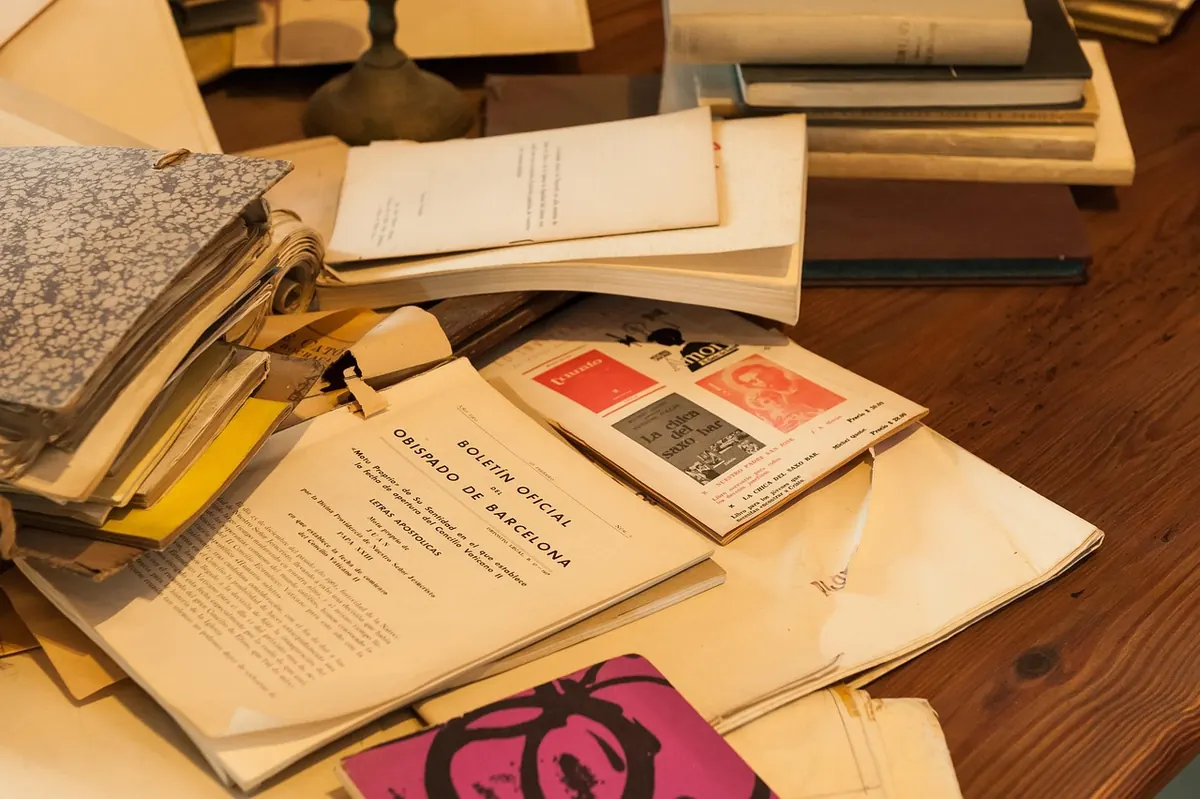
Photo: Angelo_Giordano / Pixabay