

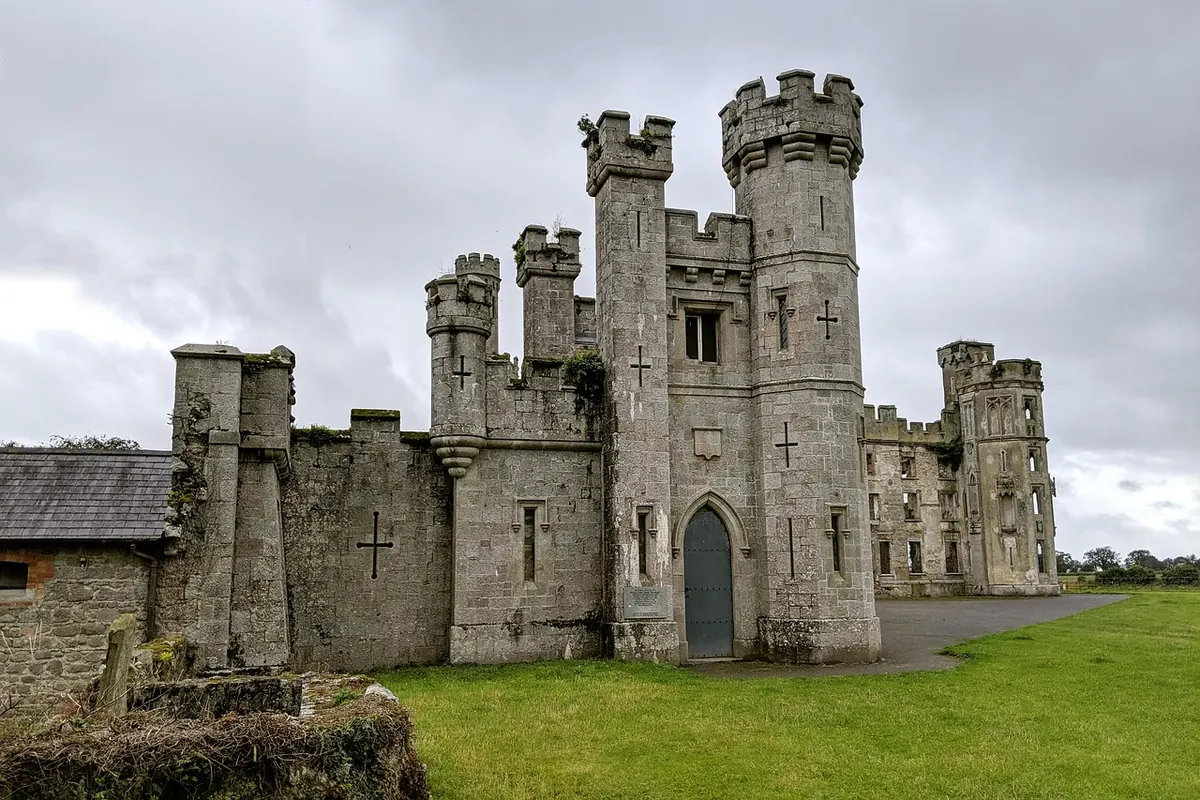

A tour guide at Tintagel tells you Arthur is a legend. A friend describes a story as myth. A museum label files something under folklore. Three words, used as though they mean the same thing, and most of the time nobody stops to check.
They are not the same, and the differences are not just academic fussiness. The words point to different kinds of claim, different settings, and different relationships between a story and the people who tell it. Get them straight, and you start asking better questions of everything from a folk ballad to a heritage plaque.
The short definitions
Folklorists have argued over the edges for well over a century, but the working distinctions are reasonably stable.
Myth is a sacred or foundational story, set in a distant age before ordinary history, involving gods, ancestors, or forces that shaped the world as it now is. It is told within a belief system rather than for entertainment, and it usually explains something: why the seasons turn, why death exists, why a people lives where it lives.
Legend is a story told as true, set in historical time and real geography, usually about human beings. A saint, a king, an outlaw, a witch, a strange beast in a particular loch. There may be a grain of real event underneath, or there may be nothing at all, but the telling carries a claim to have happened.
Folklore is the umbrella. It covers a culture's expressive traditions — tales, songs, customs, beliefs, games, crafts, sayings, dialect — and the academic study of them. William Thoms coined the term in a letter to The Athenaeum in 1846, proposing it as a replacement for "popular antiquities".
There is a fourth term worth keeping in your pocket. A folktale is a fiction told for the pleasure of the telling, with no fixed time or place: "once upon a time", in a kingdom that is nowhere in particular.
Myth: stories that say how things are
Norse myth gives us Yggdrasil, the ash tree holding the nine worlds together, nibbled from below by a serpent and from above by an eagle. Greek myth gives us Demeter's grief and the bargain that brings Persephone back each year. Welsh tradition gives us the Mabinogion, Irish tradition the invasions of the Lebor Gabála Érenn. Further afield, Hindu cosmology, West African trickster cycles and Aboriginal songlines each do work that goes far beyond plot.
The common mistake is to hear "myth" as "lie". In everyday speech it often does mean a false belief — the myth that goldfish have three-second memories, the myth that you lose most of your body heat through your head. Technical myth is a different animal. It is a story a culture treats as true in the deepest sense, about matters that cannot be settled by evidence.
Which is why calling someone's sacred narrative "just a myth" is a small act of violence. It imports the debunking sense into a context where it does not belong.
Legend: stories with an address
Legends are local. They name villages, hills, graves and stretches of coast, and they change as the landscape changes. The Lambton Worm belongs to County Durham. Robin Hood belongs to Sherwood, Barnsdale, and about forty other places that would each like the credit. Nessie belongs to one loch and nowhere else.
The word itself is a clue. Latin legenda means "things to be read" — the lives of saints, read aloud in religious houses on their feast days. Medieval hagiography is the great engine of European legend-making, and plenty of it grew around real people whose biographies were later rearranged to fit a pattern.
Listen for the phrasing. Legends come with "they say", "my grandmother's cousin saw it", "it's well known round here". Urban legends work exactly the same way: the vanishing hitchhiker, the stranger in the back seat, the friend of a friend. Modern setting, same old machinery.
Folklore: the whole cupboard
Both myth and legend are folklore. Folklore is the category, not a third sibling.
It also includes a great deal that is not narrative at all:
- Calendar customs — well-dressing in Derbyshire, first-footing at New Year in Scotland, cheese-rolling, morris dancing.
- Beliefs and superstitions — saluting a lone magpie, never putting new shoes on a table, saying "rabbit" on the first of the month.
- Speech and song — proverbs, riddles, skipping rhymes, dialect words, work songs, ballads.
- Material craft — thatching patterns, boat-building methods, rushlights, bread shapes for particular feast days.
- Personal experience stories — the memorate, a first-hand account of something odd, which folklorists treat as its own genre.
Note that folklore is not automatically wrong. Weather lore such as "red sky at night, shepherd's delight" describes a real pattern in mid-latitude weather systems, even if it fails often enough to be useless as a forecast. Charm and remedy traditions sometimes encode careful observation and sometimes encode nothing but hope.
Where the lines blur
Genres shift, and the same story can walk between them. When Christianity took hold in Ireland, the Tuatha Dé Danann were not deleted; they were demoted, shrinking from gods into the fairy folk of the sídhe. Fionn mac Cumhaill and Cú Chulainn sit awkwardly between myth and legend, mythic in their powers and rooted in real townlands.
Arthur is the classic case. In early Welsh and Latin sources he is a figure of impossible feats; in Geoffrey of Monmouth he is pseudo-history; in later romance he is something closer to folktale. The label depends on which telling you pick up.
Folk tales also get localised into legend over time — a wandering story about a persecuted girl suddenly acquires a specific kitchen in a specific house, and visitors can go and look at it.
A quick test
Ask these of any story and see which fits best:
- Does it explain why the world, or something in it, is the way it is? Myth.
- Are the main actors gods, spirits or non-human powers rather than people? Myth.
- Could it be pinned to a place you can visit and a point on a timeline? Legend.
- Is it told as though it happened, with a "they say" or a named local attached? Legend.
- Is it a fiction with no fixed time or place, told for the pleasure of it? Folktale.
- Is it a custom, song, belief or object rather than a story? Folklore, in the broad sense.
No test catches everything. Use it as a starting point, not a verdict.
Why the distinction is worth keeping
The label changes the question you ask. Myth asks what a culture believed about the sacred and the origins of things. Legend asks how a community understands itself and which places carry meaning for it. Folklore asks how people actually lived, celebrated, warned and entertained each other.
That has practical consequences. If you write, guide, teach or simply read widely, a few habits will serve you well. Record who told you a story, where and when, because versions vary and the variation is the interesting part. Resist tidying a story into one correct telling. Check whether a place name predates the tale attached to it, since the reverse is often true. Ask before repeating a tradition that belongs to a living community. And treat the word "ancient" with suspicion: a surprising amount of what gets sold as age-old lore is Victorian invention dressed in older clothes.
Used carefully, the three terms stop being interchangeable and start being useful. They tell you what kind of thing you are holding, and what kind of care it deserves.
Photo: moshehar / Pixabay