


Ask ten people in the same village to describe their local folklore and you will get three answers: a ghost story, a shrug, and something about a pub. All three are correct. Folklore is not a cabinet of dusty tales; it is the ordinary, stubborn, half-believed knowledge of a place — what people say, sing, do and avoid without ever calling it folklore. You do not need a degree to start exploring it. A map, a notebook and a willingness to ask slightly odd questions will carry you a long way.
What folklore actually covers
Beginners often arrive looking for myth in the grand sense: gods, creation, a pantheon. Britain has very little of that. What it has in enormous quantity is legend — short, place-bound stories told about a specific well, hill, church or crossroads, usually with a name attached. That is good news. Your starting point can be the end of your street.
The subject breaks into four rough buckets, and most local material sits in more than one:
- Narrative: the Mermaid of Zennor in Cornwall, Black Shuck in East Anglia, kelpies and selkies in Scotland, fairy and bogie tales, plus the family stories that turn out to be told in every parish for forty miles.
- Custom and calendar: Padstow's Obby Oss, the Abbots Bromley Horn Dance, Castleton Garland Day, the Mari Lwyd in south Wales, Up Helly Aa in Shetland, wassailing orchards in January.
- Belief and superstition: first-footing at New Year, not putting new shoes on a table, coins dropped in a well, whatever you say when a magpie crosses your path.
- Material and landscape: witch marks scratched into beams, holy wells, rag trees hung with strips of cloth, hawthorns left well alone, and the folklore fossilised in place names.
It is regional long before it is national
There is no single British folklore, and any book that implies otherwise is tidying up. Traditions shift every twenty miles. Piskies belong to Cornwall; boggarts haunt Lancashire and Yorkshire farmhouses; the Lantern Men flicker over the fens; trows live in Orkney and Shetland; the Cailleach shapes weather and landscape in Gaelic Scotland; the Afanc lurks in Welsh pools. The calendar differs too — well dressing is a Derbyshire affair, while the horn dance belongs to one Staffordshire village.
For orientation, look for regional collections rather than national compendiums, and start with a county name in the title. Then ask what else the story is attached to. Legends rarely float free; they cluster round a standing stone, a bridge, a church porch or a particular farm.
How to start investigating your own patch
This is the part that sounds daunting and is not. Work through it in order.
- Read the map properly. Ordnance Survey sheets, and older editions if you can find them, are folklore documents. Names containing puck, hob, boggart, gallows, lady or well are worth a note, as are bound stones, fairy rings and unexplained earthworks.
- Visit the local studies library or county record office. Ask for parish collections, antiquarian notes, newspaper cuttings and any folklore files. Staff are usually delighted to help; these holdings are often badly under-used.
- Read the old collectors — carefully. Robert Hunt in Cornwall, Sabine Baring-Gould in Devon and Yorkshire, and dozens of Victorian clergymen left rich material behind. They also tidied, moralised and occasionally invented. Treat them as leads, not verdicts.
- Talk to people, and write down what they say. Note the date, the name of the teller, and whether the story is first-hand, family lore or simply "everyone knows". Ask permission before recording, and never publish a name or address without it.
- Check the story elsewhere. If it appears in only one nineteenth-century source, say so when you share it. If it turns up in five, you have something solid.
Sources worth trusting
Reliable folklore is unglamorous: it names its sources and admits uncertainty. A few places to lean on:
- The Folklore Society, founded in 1878, publishes the journal Folklore and keeps a specialist library.
- The Vaughan Williams Memorial Library, run by the English Folk Dance and Song Society, holds songs, tunes and custom records, with growing online access.
- National heritage databases — Historic England, Canmore in Scotland, Coflein in Wales — for the archaeology sitting behind a legend.
- Modern reference works: Katherine Briggs's Dictionary of British Folk-Tales, Westwood and Simpson's The Lore of the Land, Steve Roud on superstitions, and Ronald Hutton on calendar customs.
- Old maps and newspaper archives, which show when a story first appears in print.
Two habits will keep you honest. Date everything, and separate what was collected from a teller from what a writer composed. Plenty of much-repeated "ancient" tales are nineteenth-century inventions, and pointing that out is not pedantry. It is usually the most interesting part.
Respect the living tradition
Folklore is not always past. Well dressings, wassails, bonfire nights and morris sides are happening now, and some customs are religious, or deeply personal to the families who keep them. Ask before photographing or joining in, keep off private land, leave wells and trees as you found them, and resist framing local people as quaint survivals. The best collectors behave like guests.
Start this weekend
Pick one small thing. Choose a place name on your nearest map that you cannot explain, then find out what it means. Visit the spot and note what you see. Take one question to a local studies library and give yourself an hour with an old county collection.
One place, one story, one source at a time is how the good collections were built in the first place. Your patch holds more than you think.
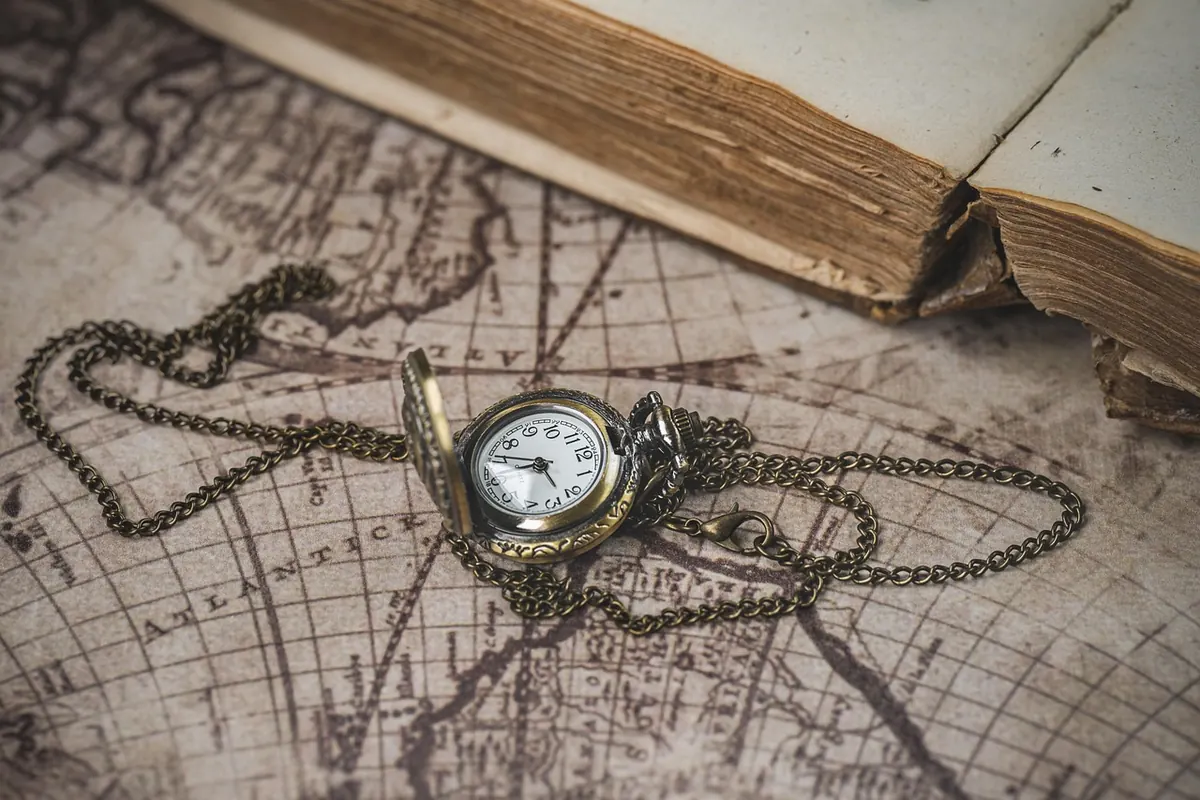
Photo: Ylanite / Pixabay